AI Automation
AI automation for the repetitive judgement calls
For teams spending time reading, sorting, extracting or drafting similar information every day.
Discuss your projectCalgary and Lahore. Working with teams across Canada and the US.
Built around the work you need to do.
Some work is too nuanced for a rule and too repetitive for a person: sorting inbound email, extracting fields from invoices, drafting first-pass replies, flagging what needs a human. We build these as narrow, observable systems with a confidence threshold and a human review path, so nothing important is decided silently. You see what it did and why, and you can turn any step off.
Typical projects
- Classify enquiries and route them for review
- Extract invoice or document fields for approval
- Generate personalised drafts from a stored profile
What you receive
Your written scope identifies the deliverables, dependencies, timeline and acceptance criteria before the build begins.
- Automated classification or extraction pipeline
- Confidence thresholds with human-in-the-loop review
- Audit log of every automated decision
- Accuracy monitoring and alerting
Tools we work with: OpenAI, Anthropic, Python, n8n, Webhooks. We select the stack after reviewing the requirements.
Related team work
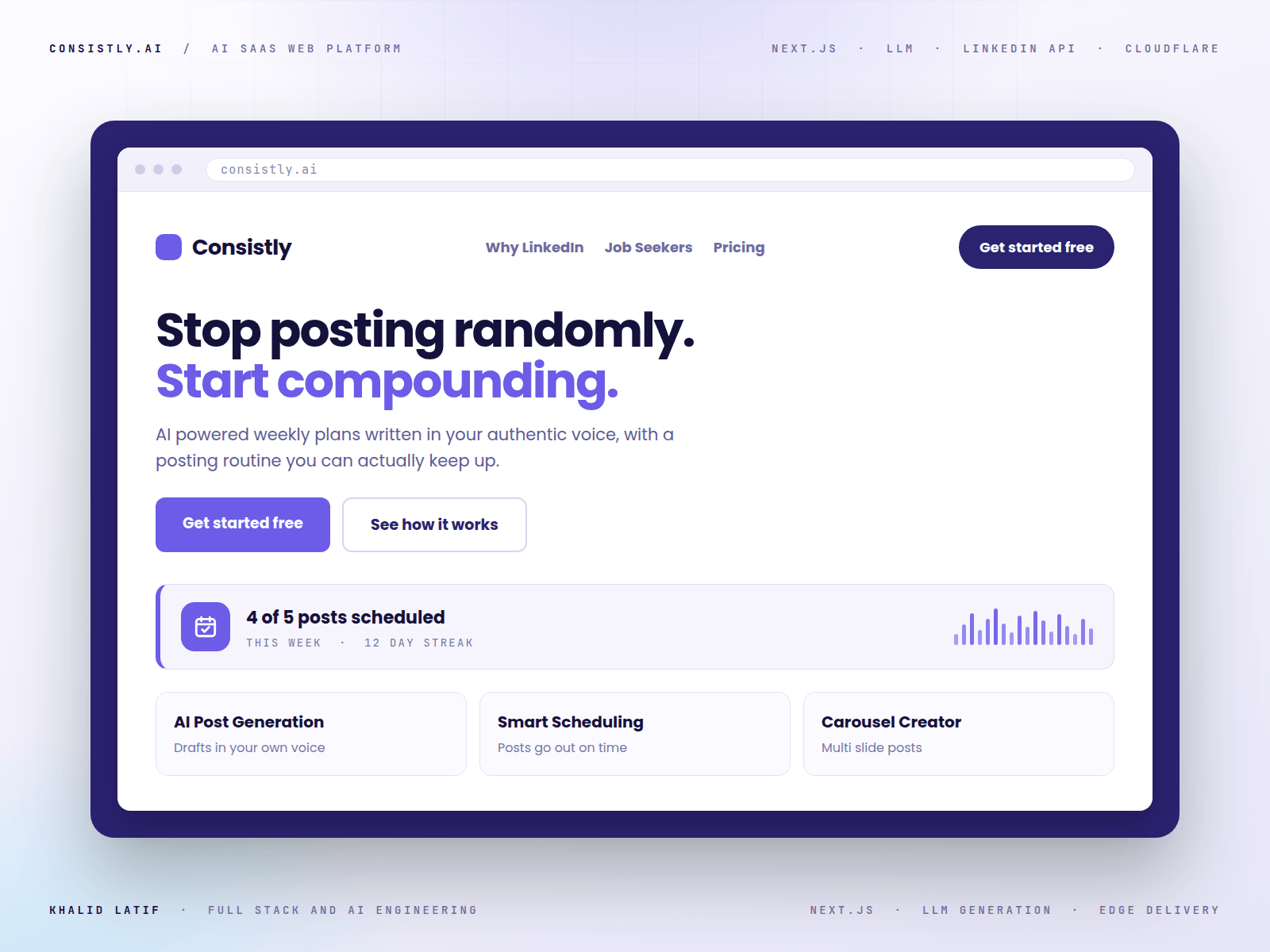
Consistly.ai
The AI and automation engine connecting personalised content strategy, weekly ideas, voice-matched drafts, and LinkedIn publishing.
Explore the projectFrom scope to handover
Step 1
Understand
Review the problem, users, existing systems and constraints.
Step 2
Agree the scope
Put deliverables, costs and success criteria in writing.
Step 3
Build and verify
Share working increments and test the agreed user journeys.
Step 4
Launch and hand over
Deliver the code, documentation and agreed support plan.
Before we start
Does every step need AI?
No. Rules and standard integrations handle predictable steps. AI is reserved for tasks involving language or variation that rules cannot handle well.
Can our team review the output?
Yes. We define the review points and confidence thresholds with you, including which actions require approval and how the workflow can be paused.
Tell us what you want to improve.
Bring a problem, an existing system or an idea. We will help define a practical next step and a written scope.